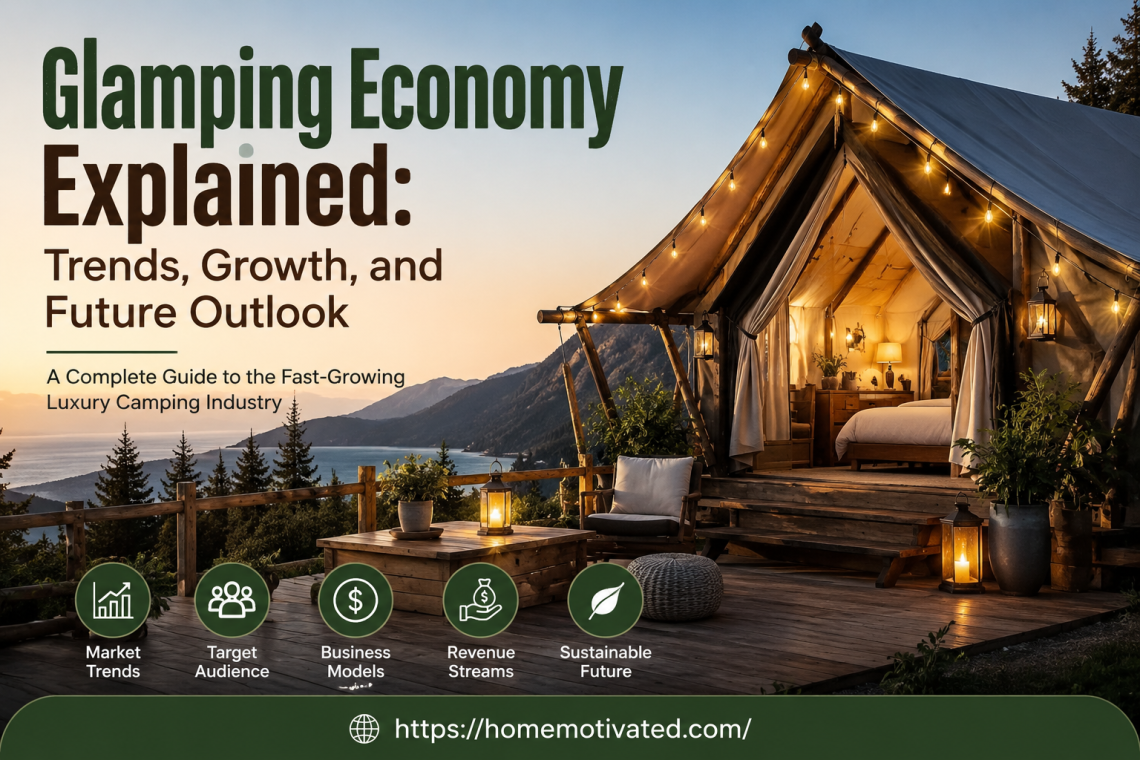
Glamping Economy Explained: Trends, Growth, and Future Outlook
The glamping economy is transforming the travel industry by blending luxury with outdoor experiences. In this guide, you’ll learn how it works, why it is growing, and what the future looks like.
What Is the Glamping Economy?
The glamping economy combines luxury and outdoor camping to create a modern travel experience. It allows people to enjoy nature without giving up comfort.
Instead of sleeping on the ground, guests stay in comfortable tents, cabins, or unique lodges with real beds, electricity, running water, and sometimes even high-quality meals prepared on-site.
This style of travel is perfect for people who love adventure but still want a cozy and relaxing stay. It lets visitors explore beautiful natural places while enjoying the same comforts they would have in a hotel.
As more travelers look for unique, comfortable, and eco-friendly experiences, the glamping economy continues to grow. It attracts families, couples, and anyone who wants a peaceful escape from daily life without rough camping conditions.
Why the Glamping Economy Is Growing Worldwide
The glamping economy is growing fast because more people want nature experiences with modern comfort. Travelers today prefer unique stays that feel relaxing, enjoyable, and different from normal hotel trips.
Social media has also boosted its popularity. Beautiful photos of luxury tents, cabins, and outdoor setups encourage people to try glamping for themselves and share their own experiences online.
After the pandemic, many travelers started choosing open, outdoor, and less crowded places. Glamping became a safe and comfortable option because it offers fresh air without giving up luxury.
Sustainability is another big reason for its growth. Many travelers now prefer eco-friendly travel options that are better for the environment and feel more responsible.
Because of these trends, more people around the world are choosing glamping, making it one of the fastest-growing travel styles today.
Core Elements Driving the Glamping Economy
The glamping economy is built on a mix of comfort and nature, giving people a chance to enjoy the outdoors without losing modern luxury.
A major part of its growth comes from eco-friendly and sustainable practices. Many travelers prefer places that are better for the environment and support responsible tourism.
Location also matters a lot. Glamping sites near beautiful natural areas or popular attractions attract more visitors because they offer both adventure and convenience.
Extra experiences make glamping even more appealing. Activities like hiking tours, wellness sessions, and high-quality dining turn a simple stay into a full experience.
Modern technology is another key factor. Things like Wi-Fi, smart features, and comfortable setups help guests stay connected while still enjoying nature.
Finally, many glamping businesses work with local communities. Partnering with local farmers and artisans improves the guest experience and also supports the local economy.
Target Demographics Fueling Glamping Demand in the U.S
In the U.S., the glamping economy attracts a wide range of travelers. Millennials are one of the biggest groups, looking for unique outdoor experiences that combine nature, comfort, and beautiful, social-media-friendly settings.
Gen Z is also a growing audience. They care a lot about sustainability and prefer eco-friendly travel options that still offer comfort and style.
Families are another important group. Parents choose glamping because it allows them to enjoy outdoor trips with their kids while still having comforts like proper beds, safe spaces, and good food.
Baby boomers are also part of this trend. They enjoy visiting natural places like national parks but prefer staying in comfortable accommodations instead of traditional camping.
Together, these different groups are helping the glamping industry grow across the United States by increasing demand from all age ranges.
Why Americans Are Willing to Pay More for Glamping Experiences
Americans are willing to pay more for glamping because it offers a unique mix of nature and luxury. It is not just outdoor camping—it is a comfortable and stylish way to enjoy the outdoors.
The growth of wellness tourism is another big reason. Many people now look for peaceful trips that help them relax, reduce stress, and reconnect with nature, and glamping fits this need perfectly.
Social media also plays a strong role. Eye-catching photos of luxury tents and cozy cabins on platforms like Instagram inspire people to try these beautiful travel experiences for themselves.
Another reason is comfort and quality. Guests get better bedding, tasty meals, and planned activities that make the experience more enjoyable than traditional camping.
In today’s busy life, many Americans see glamping as worth the extra cost because it creates special memories with family and friends in beautiful natural places.
Business Models Within the Glamping Economy
The glamping economy includes several business models that serve different types of travelers and experiences.
One common model is boutique glamping sites, where guests stay in luxury tents, yurts, or cabins with high-end comforts and beautiful natural views. These are designed for travelers who want both nature and relaxation.
Another model is pop-up glamping, which appears at festivals, events, or special occasions. These temporary setups offer a unique experience without needing permanent land or buildings.
There are also eco-friendly glamping businesses that focus on sustainability. They use green practices and eco-conscious designs to attract travelers who care about the environment.
Some entrepreneurs choose franchising, where they operate under an existing glamping brand. This helps them start faster while still adding their own local style.
Each of these models offers different opportunities and challenges, showing how flexible and diverse the glamping industry has become.
How Much Does It Cost to Start a Glamping Business in the U.S?
Starting a glamping business in the U.S. can cost differently depending on location, size, and setup style.
One of the biggest costs is land, whether you buy or lease it. Most investors choose scenic areas with strong tourism potential to attract more guests.
The next major expense is building the accommodations, such as safari tents, yurts, or cabins. High-quality and comfortable setups are important because they directly affect guest experience and bookings.
There are also permits and legal approvals, which vary by state. These rules must be followed for zoning, land use, and environmental safety.
Marketing is another key cost. A strong online presence through websites and social media helps bring in customers in a competitive market.
Finally, ongoing costs like staff, maintenance, and operations are needed to keep the business running smoothly and ensure guests have a great experience that encourages repeat visits.
Read More Information!
Lyposingrass Full Guide: Uses, Facts, and Real Insights
Plangud Meaning: Definition, Uses, and Internet Discussion
The Complete Guide to Pyntekvister in Modern Decor
What Is Messeregge? Meaning, Uses, and Why It’s Trending
How to Choose the Right Roof Truss for Your Home
Glamping Revenue Streams
The glamping economy earns money from more than just overnight stays. A big part of the income comes from extra experiences like guided tours, wellness retreats, and cooking or cultural workshops that guests can join.
Many sites also make additional profit through merchandise, such as local handmade crafts or branded items that guests buy as souvenirs.
Another strong income source is partnerships with local businesses. Glamping sites often create packages with nearby attractions, which helps bring in more visitors for both sides.
Food and drinks also add to earnings. This can include anything from gourmet meals under the stars to simple but cozy campfire dining experiences.
Finally, hosting events like weddings, parties, and corporate retreats brings in high revenue and helps fill spaces during slower seasons, making the business more stable year-round.
Operations, Tech Stack, and Distribution Strategies in Glamping Businesses
Glamping businesses run smoothly by using both hospitality skills and modern technology like booking systems and customer management tools to improve guest experience.
For bookings, they rely on platforms like Airbnb and other travel sites, which help reach more customers and increase visibility.
Social media marketing also plays a big role by attracting guests through photos and videos, leading to direct bookings.
Mobile-friendly websites are important too, as most travelers now book trips on their phones. Staying updated with technology helps glamping businesses stay competitive and grow.
Glamping Economy Profitability
Glamping profits depend on ROI, profit margins, and occupancy rates. These numbers show how well a business is performing.
ROI changes based on location, setup cost, and services, but many investors earn good returns because glamping attracts high-paying guests.
Profit margins are usually strong since luxury stays can charge higher nightly rates than regular camping.
Occupancy is higher in peak seasons, while off-season demand is managed with discounts or special events.
Tracking these factors helps owners increase profit and grow the business successfully.
Challenges, Risks, and Legal Barriers in the Glamping Economy
The glamping industry faces some key challenges, starting with strict zoning laws that limit where sites can be built.
Businesses must also meet safety and building regulations, which can be costly and complex.
Insurance is important too because outdoor setups face risks like accidents or bad weather damage.
Environmental protection is another concern, so operators must use sustainable practices to protect nature and attract eco-friendly travelers.
Finally, growing competition makes it important for businesses to stand out to succeed long term.
Read More Information!
Tortellinatrice: Meaning, Uses, Benefits & Buying Guide
What Is Crown Molding? Types, Benefits, and Installation Tips
How to Wash Couch Cushion Covers Without Damaging Fabric
How to Clean Concrete Patio Fast
What is Simpcoty? A Fun Way to Get Organized
The Future of the Glamping Economy
The glamping economy is expected to grow strongly as more people look for unique outdoor stays with comfort and luxury. Travelers, especially younger generations, now prefer experiences over material things, and glamping fits this lifestyle perfectly.
Technology, sustainability, and wellness travel are shaping its future, making it more modern and eco-friendly. Social media also helps growth by promoting beautiful, Instagram-friendly stays that attract more visitors.
By 2026, glamping is likely to expand beyond tents into options like treehouses, yurts, and other creative stays, with choices for different budgets.
Investors are showing more interest as the industry offers strong returns and rising demand. Overall, the future of glamping looks bright, driven by innovation, comfort, and a growing love for nature-based travel.
Conclusion
The glamping economy is growing fast because it combines comfort, nature, and unique travel experiences. With strong demand, new business models, and rising investment, it is becoming one of the most promising sectors in modern tourism.
FAQS about Glamping Economy
What does glamping mean?
Glamping is a mix of two words: “glamorous” and “camping.” It means camping in nature, but with comfort and luxury. Instead of sleeping in a basic tent, people stay in stylish tents, cabins, or pods that often have beds, electricity, bathrooms, and sometimes even air conditioning. Glamping lets people enjoy nature without giving up comfort.
What is eco glamping?
Eco glamping means luxury camping that is friendly to the environment. It focuses on protecting nature while giving guests a comfortable stay. Eco glamping places often use solar energy, recycle waste, save water, and build structures that do not harm the land. The goal is to enjoy nature while also keeping it clean and safe for the future.
What is the glamping financial model?
The glamping financial model explains how glamping businesses make money and spend money. Most glamping businesses earn income by renting tents, cabins, or unique stays to guests per night. They may also earn extra money from food services, tours, or special experiences. On the cost side, they spend money on land, setup, maintenance, staff, and marketing. The goal is to earn more money than the total costs to make a profit.
What is the meaning of glamping business?
A glamping business is a company that offers luxury camping experiences to travelers. Instead of simple camping sites, it provides comfortable outdoor stays with modern facilities. This can include safari tents, treehouses, tiny homes, or dome stays. The business makes money by hosting guests who want to enjoy nature without sacrificing comfort and convenience.


You May Also Like
What Is Wollmatten? The Shocking Truth Behind This Viral Term

Queen Size Blanket Dimensions: Everything You Need to Know Before Buying