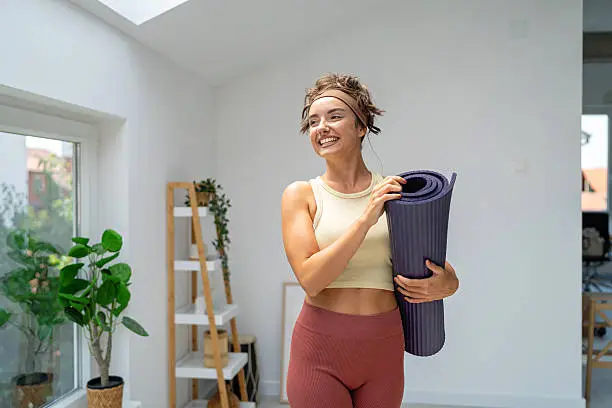
Home Workout Space Ideas for Small Apartments: A Practical Guide
If you’re short on space and trying to figure out how to fit a workout area into a small apartment, here’s the quick answer: you don’t need a spare room or expensive machines. You need a small, dedicated floor area (even just 6×8 feet works), a few multi-functional pieces of equipment that fold or stack away easily, and a system that lets the space return to “normal living room” mode the moment your workout is over. That’s really the whole secret behind every successful home workout space ideas setup, no matter how tight the square footage is.
Now let’s get into exactly how to make that happen, step by step.
A friend of mine lives in a one-bedroom apartment in North Carolina and spent almost a year telling me she “didn’t have room” for a home gym. Then one day she pushed her coffee table six inches to the side, rolled out a mat between her sofa and the wall, and realized she’d had enough space the entire time — she just hadn’t thought about it the right way. That’s honestly the biggest shift when it comes to gymnastics at home ideas or any kind of small-space fitness setup: it’s less about how much square footage you have, and more about how cleverly you use it.
Why Small Apartments Make People Give Up on Home Workouts Too Early
Most people assume a home gym means a dedicated room with a treadmill, a rack, and mirrors on every wall. When that image doesn’t match their actual apartment, they assume it’s simply not possible — and that assumption is usually wrong.
The real obstacles in small apartments tend to be:
- No extra room to spare for equipment
- Worrying about noise and disturbing neighbors
- Equipment that’s hard to put away, so it becomes clutter
- Renting, which limits what you can install or modify
- Not knowing where to even start with layout
Once you address these one by one, a small apartment becomes a lot more workable than it first seems.
1. Pick a “Flex Zone,” Not a Dedicated Room
The single most useful mindset shift for home workout space ideas in an apartment is to stop thinking of it as a permanent room and start thinking of it as a flexible zone that activates when you need it and disappears when you don’t.
Look for an area that’s roughly 6×8 feet — that’s usually enough for floor exercises, stretching, or light equipment use. Common spots include:
- The gap between your sofa and a wall
- A clear corner of the bedroom
- Beside a window with natural light, which makes the space feel more energizing
- A hallway-adjacent nook that isn’t used for much else
The point isn’t to permanently convert the room — it’s to identify a spot where you can roll out a mat, do your workout, and put everything away within a few minutes.
2. Choose Equipment That Earns Its Square Footage
In a small apartment, every piece of equipment needs to do two things well: get used regularly, and store away easily. If something fails at either one, it tends to end up shoved in a closet or, eventually, sold off.
Some smart picks for tight spaces:
- Resistance bands – take up almost no space and work for a huge range of exercises
- Adjustable dumbbells – modern designs let one compact set replace an entire rack of weights
- A foldable mat or rug – doubles as a workout surface and a stretching/yoga space
- A stepping stool or stability ball – versatile, lightweight, easy to tuck away
- A door-mounted pull-up bar – adds strength training options without taking up floor space at all
The general rule: if you can’t picture exactly where it goes when you’re done using it, it’s probably not the right piece of equipment for your space.
3. Use Vertical Space for Storage
Floor space is precious in a small apartment, but wall space is almost always underused. This is one of the easiest wins for keeping a home workout area from turning into visual clutter.
A few ideas that work well:
- Mount hooks for resistance bands, jump ropes, or yoga mats
- Use a slim pegboard to organize smaller items like gloves or grip accessories
- Install a floating shelf for foam rollers, water bottles, or a speaker
- Lean a folded mat against the wall in a corner rather than leaving it on the floor
Getting equipment up off the floor instantly makes a small space feel more open, and it also means less tripping over things mid-workout.
4. Setting Up a Home Gymnastics or Flexibility Corner
If your workouts lean more toward flexibility, mobility, or basic home gymnastics ideas rather than heavy lifting, the space requirements actually become even easier to manage. You don’t need a squat rack or a bench — you mainly need clear floor space and a stable surface.
For a simple gymnastics-at-home setup, consider:
- A thick floor mat for stretches, bridges, and basic tumbling movements
- A low balance beam alternative, such as a foam balance pad, for stability work
- Wall space for hanging resistance bands used in flexibility training
- A doorway pull-up bar, which doubles as a tool for basic hanging and grip-strength work often used in gymnastics conditioning
Since most gymnastics-style training relies on bodyweight movement rather than bulky machines, it’s actually one of the most apartment-friendly forms of home workout space ideas you can build around — especially if your ceiling height and floor space are limited.
5. Be Mindful of Noise and Flooring
This is something a lot of people overlook until a neighbor mentions it. Jumping, dropping weights, or using a treadmill can transmit a surprising amount of sound through apartment floors.
A few practical fixes:
- Use a thick rubber mat or interlocking foam tiles under any equipment
- Choose low-impact versions of cardio exercises if you’re above another unit
- Avoid dropping free weights — place them down with control instead
- Time noisier workouts for hours when neighbors are less likely to be home or asleep
This isn’t just about being considerate — it also protects your flooring and reduces wear on your equipment over time.
6. Check With Your Landlord Before Major Changes
If you’re renting, it’s worth having a quick conversation with your landlord before installing anything that involves drilling, wall mounts, or heavier permanent fixtures. Most landlords are fine with reasonable, removable setups, especially if you mention you’ll use protective flooring.
Renter-friendly options include:
- Tension-mounted pull-up bars that don’t require drilling
- Adhesive hooks rated for lightweight gear
- Freestanding shelving instead of wall-mounted units
- Floor mats that protect rented flooring from scuffs or dents
A short conversation upfront can save you from any deposit issues later on.
7. Make the Space Something You Actually Want to Use
One detail that gets overlooked in a lot of home workout space ideas is how the area actually looks and feels. A dim, cluttered corner doesn’t exactly inspire anyone to show up consistently, but a clean, intentional-looking space does.
Small touches that help:
- A motivating piece of wall art or a simple accent color nearby
- Good lighting, even if it’s just a portable lamp
- Keeping the area tidy so it doesn’t blend into “storage clutter”
- Positioning your mat near a window if natural light is available
You don’t need to over-decorate it — just enough that the space feels like it was set up on purpose, not squeezed in as an afterthought.
Final Thoughts
Building a home workout space in a small apartment isn’t about finding extra square footage you don’t have — it’s about being intentional with the space you already have. A flexible zone, a few multi-purpose pieces of equipment, smart vertical storage, and a bit of consideration for noise and flooring can turn even the tightest apartment into a setup you’ll actually use consistently.
Whether you’re focused on strength training, simple gymnastics at home ideas, or just want a quiet corner for stretching and mobility work, the same principle applies: keep it simple, keep it accessible, and let the space adapt to your life rather than the other way around.
Frequently Asked Questions
How much space do I actually need for a home workout area? A space of around 6×8 feet is usually enough for most bodyweight exercises, stretching, and light equipment use. You don’t need a full room — a cleared corner or the gap between furniture pieces often works just fine.
Can I do gymnastics-style training at home without special equipment? Yes. Most home gymnastics ideas rely on bodyweight movements, flexibility work, and balance training rather than heavy machines. A floor mat, some open space, and occasionally a balance pad or pull-up bar are usually enough to get started.
What’s the best flooring for a small home workout space? Interlocking foam tiles or a thick rubber mat are popular choices since they protect your floors, reduce noise for neighbors below, and double as a comfortable surface for stretching or floor exercises.
Will my landlord allow a home gym setup in a rental apartment? In most cases, yes, especially if the setup is reasonable and doesn’t involve permanent changes like drilling into walls. Renter-friendly options like tension-mounted bars, freestanding shelves, and protective mats are usually a safe bet, but it’s always worth a quick conversation first.
How do I keep my workout area from turning into clutter? Choose equipment that has an obvious, easy place to live when it’s not in use — hooks, shelves, or a corner where a mat can lean. If a piece of equipment is hard to put away, it tends to stay out and start feeling like clutter, which is one of the most common reasons people abandon small-space setups.


You May Also Like