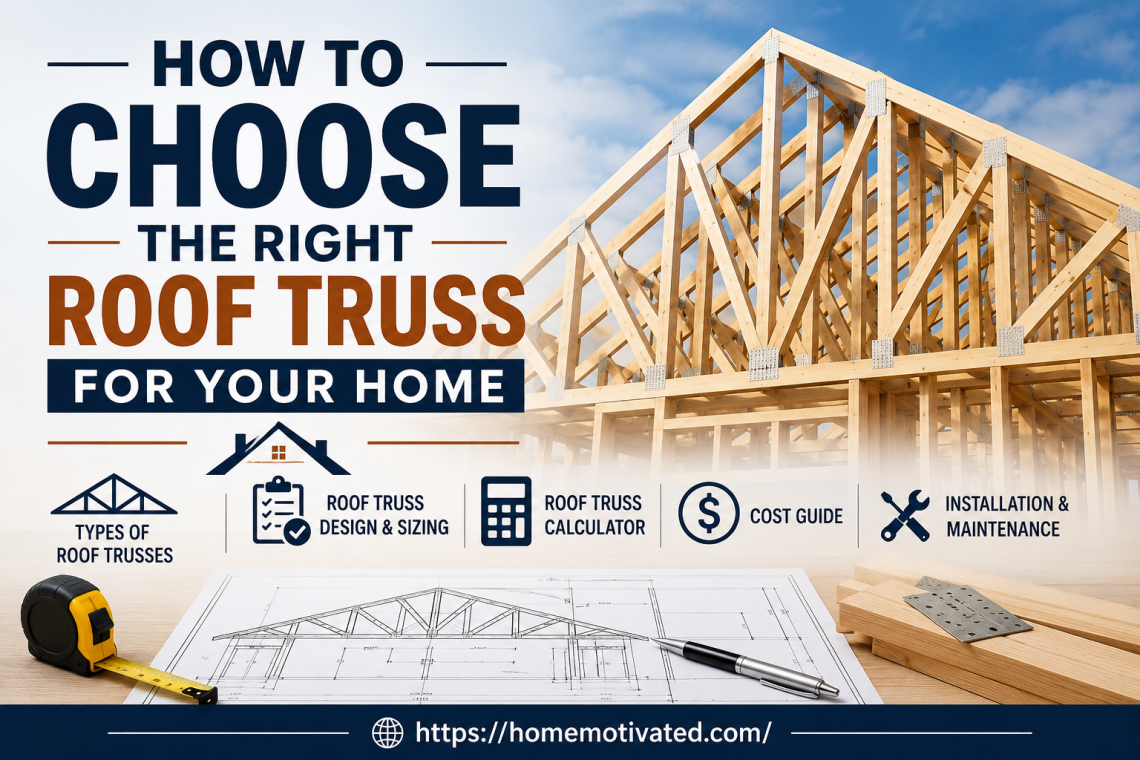
How to Choose the Right Roof Truss for Your Home
Selecting the proper roof system is crucial to the strength, safety and design of your home. This is all you need to know about Roof Truss, roof trusses and truss roof systems easily. We’ll discuss how they work, the key components, various types, design considerations, cost, installation, and even how to use a roof truss calculator. This comprehensive guide will provide a clear understanding of headings so you can decide what is best suitable for your home build or remodel.
What Is a Roof Truss?
A roof truss is a type of frame that’s used to support the roof load of your home. Usually constructed from wood or steel, these triangular structures spread the weight across the entire building.
Trusses are made up of a number of elements, including chords and webs, and these elements combine to form a strong but still lightweight structure. The shape is stable even when the shape and then you can have the open drinking examination win without fear of additional balconies.
Any builder or homeowner can benefit from a knowledge of the basic roof truss. They’re not just functional — they can enhance the architectural appeal of your home by adding a variety of styles and shapes that work with the design of your home.
In addition, the use of roof trusses lends itself to easier construction. They are manufactured in controlled environments, resulting in less on-site labor and less waste. Not only does this efficiency save money, but it can also greatly streamline project timelines.
Roof Truss Components
Roof trusses are structural systems comprised of numerous integral parts, all of which collaborate to hold up your roof. These components are important to know for anyone who is looking at a truss roof design.
The principal parts are the top chord, the bottom chord and the web members. The Bottom Chord is also Crucial for Stability. The Top Chord carries the load from above, but the Bottom Chord also plays a part in the overall stability. Web members are used to join these two chords, which helps break loads down and establish an excellent framework.
Gussets or connectors are also involved to attach each piece firmly. The connections are structural and have to resist different forces, such as the wind and snow loads.
Some of the designs are feature-rich with special options to cater for the specific roofing needs. Knowledge of these components also enables homeowners to make an informed decision on the best roof truss design for them, taking into consideration sturdiness and cost-effectiveness in building.
How Roof Trusses Work in a Truss Roof System
Roof trusses are an essential part of a building’s infrastructure. They help keep things stable and strong by balancing the weight. The triangular formation is especially efficient, as it creates an unyielding support system that can endure different forces.
As load (snow, wind, etc) is placed on the roof, the trusses transfer that load down to the walls. This way, no single point gets too much pressure, and the entire system is balanced.
Not only do roof trusses provide support, but they also create an open space underneath. The versatility can give you eye-catching room arrangements without the loss of strength.
The position and spacing of each truss are critical components to allowing maximum efficiency. Having the right calculations will ensure that your house not only complies with local building regulations but also withstands environmental challenges. With a clear understanding of how these parts work together, homeowners can feel empowered to make decisions when building or remodeling.
Benefits of Roof Trusses
Trusses provide a number of efficiency and strength benefits in construction. They are very efficient in supporting loads while reducing material use. That makes them both cost-effective and light.
Another important advantage is that they can span high distances without additional support being needed. This gives both homeowners and builders additional design options.
Roof trusses can also be more easily assembled than traditional framing, leading to decreased labor costs and construction time. Prefabricated solutions guarantee a steady quality, minimizing onsite mistakes.
Also, roof trusses are better for energy efficiency, because they can be insulated better. Their design ensures optimal airflow in your home, so you can stay comfortable.
Since so many different designshare available, it is possible to tailor roof trusses to suit either architectural styles or individual tastes.
Common Types of Roof Trusses and Truss Roof Styles
When it comes to roof trusses, diversity is important in both looks and performance. The King Post is one of the simplest truss designs and is used with a vertical post sitting beneath a horizontal beam. This construction is suitable for short spans.
Also popular is the Queen Post truss, which has two vertical posts and a much wider space span. Its symmetry provides design flexibility.
If you are working on a larger building, opt for the Fink truss. It consists of diagonal members that are efficiently formed into triangular patterns, which are the strongest material-efficient.
There is also the Scissor truss that’s distinctive in shape and creates vaulted ceilings within homes. It not only delivers a generous room, but it also enhances charisma in a room. If you visualize these in perspective, you will get a better sense of the benefits of each type. Each one has to be decided on its own merits, depending on what you are looking for and what takes your eye.
Roof Truss Design
Roof truss design is a mix of art and science. Know your local building codes, as these codes specify how safe the home needs to be and the type of materials to be used.
Load calculations are essential when considering which truss type is best for your home. Load determination, including snow load, wind speed, and overall load distribution, is required.
Selection of materials is also a key factor. Although wood trusses are still widely used due to their natural warmth and appeal, metal trusses can provide greater strength and durability in some applications.
The performance effect of roof truss spacing. Usually, a minimum of 2×4 wood or 2×3 metal furring strips spaced no more than 24–36 inches apart. This distance can influence the durability of the building under various loads.
Working with professional architects or engineers will help you to manage all of this and more while making certain your home’s roof looks great and holds up against the elements.
Choosing the Right Roof Truss Design for Your Home
Selecting the right roof truss design can make a big difference to the strength and looks of your home. Consider the architectural style of your house first. In a contemporary home, you may want a clean minimalist truss design; in a traditional setting, you might want something more ornate.
Load distribution comes to your mind next. Weight capacity varies by design. For example, king post trusses work very well for light loads and small spans, but are not suitable for larger spans.
Also, be sure to consider the local weather. In snowy or windy climates, stronger truss designs may offer superior support and longevity.
A professional can determine that you are selecting an appropriate design that will work for your needs and meet local building codes. Consult them to see what solutions that they can offer that are customized to your specific needs and desires prior to making any decisions on material or size.
What Truss Profile Is Best for Your Truss Roof Build?
Choosing the right truss profile for your roof is very important. Each Is owner of its advantages according to your personal requirements.
The usual options are triangle, square and flat profiles. Triangular trusses are preferred for their strength and stability, especially in snow-heavy areas.
Indoor attic space with a square or rectangular profile. This can be good if you are going to finish that space as a living area eventually.
Flat trusses are also common in contemporary construction as they have a clean line look and are minimalistic. They also enable easier installation and decrease the amount of supplies needed.
Take into account factors such as your local climate, your architectural style and your budget when determining which profile will work best for your project. A full evaluation will lead you to a cost-effective solution that meets the needs of your home.
Types of Wood Used in Roof Trusses and Standard Dimensions
When choosing roof trusses, the wood type is very important in terms of durability and performance. The most commonly known options are pine, fir, and spruce because of their strength-to-weight ratio.
Pine is very popular due to how cheap and lightweight it is. It’s a good working air space and gives us little structural support, and its clearest known.
The density of fir enables better performance in high-load situations when durability is desired. Because of its superior stiffness, spruce leads to higher stability for the entire roof system.
With respect to sizes, normal sizes are between 2x4in to 2x12in based on the load and the span of your truss system. High-quality Wood. It is important to choose high-quality wood that complies with your local building codes and any specific design requirements you may have.
A well-treated wood is also extremely capable of prolonging the life of your roof trusses, with safety being guaranteed along their entire service life.
Roof Truss Calculator
It is more easy to measure and calculate the roof trusses for your house by using a roof truss calculator. This calculator will tell you how many trusses you will need on your roof based on its dimensions and shape.
First, you’ll need the dimensions of your building’s width, length and height. These measurements are essential for the correct calculations. Take those numbers and any relevant details about what kind of pitch or style you want, and enter them into the calculator.
Some calculators take into account local building codes for safety and compliance. They will also tell you how to calculate how much material you need, which is very useful to determine the budget.
Remember to include any extras such as snow load or wind load if you live in a weathering environment. A reasonable estimated cost will keep away waste of time and money in construction and will guarantee the strength of the structure forever.
How Many Roof Trusses Do You Need for a Truss Roof?
How many trusses are needed for a truss roof is a question with many answers. The first thing to think about is how wide your building is. The wider the span, the more trusses you will require to keep the span structurally stable.
Next, look at local building codes and regulations. They’ve been known to provide spacing recommendations based on load requirements. Typically, spacing on trusses is 24″ OC for residential applications, but this may depend upon the plans.
You have to consider the type of roof covering, as well. Heavy materials such as slate and clay tiles, or even heavy snow loads, may require the trusses to be closer together.
With a roof truss calculator, you can make this job a lot easier. Enter your dimensions and desired specifications and receive accurate estimates for your unique project. Always have the finished plans reviewed by a professional engineer or architect, as their knowledge will keep you safe and help ensure the plans meet standards.
What Size Roof Trusses Do I Need?
It is very important to select the appropriate size for your roof trusses. An appropriate sized truss will create a properly distributed load on the floor below the truss, thus providing good structural stability.
Begin with your home’s measurements. Take a ruler and a calculator. Thicken the width of the building by the length , then adjust based on how many trusses you have. The distance between the trusses is generally 16” to 24”.
Then, factor in the kind of material you’ll be using for your roof. Heavy materials such as tile or slate may need larger or more attic spaces than lightweight options such as shingles.
And remember local building codes and regulations, which may have a big impact on sizing requirements. You should also consider hiring a structural engineer or architect, as they can offer valuable guidance specific to your application.
Keep in mind that custom designs may be required if your house has special features such as vaulted ceilings or long eaves. When choosing sizes for roof trusses, always keep safety and functionality in mind.
What Is Crown Molding? Types, Benefits, and Installation Tips
How to Wash Couch Cushion Covers Without Damaging Fabric
How to Clean Concrete Patio Fast
What is Simpcoty? A Fun Way to Get Organized
Tortellinatrice: Meaning, Uses, Benefits & Buying Guide
How Much Do Roof Trusses Cost?
When it comes to the roofing trusses for your construction project, cost is a big part of the decision. The price of roof trusses can differ substantially depending on the type of materials used, the complexity of design, and the prevailing local conditions.
In general, there is a $30 to $300 cost associated with wood roof trusses for each piece. Engineered wood or steel trusses may carry a higher price tag, but they also provide added advantages in terms of strength and durability.
Costs are affected, too, by installation. Professionals may add 10-20% to your budget for their labor.
Also consider the permits and inspections that may be required during construction; these may also come with fees.
A roofing truss calculator can estimate the number of trusses needed and give a better indication of the total cost of your project prior to its beginning. Always make sure to get more than one quote from suppliers so you can compare prices and get the best deal for your specific needs.
Roof Trusses vs Rafters
The decision of roof trusses vs rafters can make or break your project when constructing a roof. Roof trusses are pre-engineered components that offer exceptional strength and stability. They transfer load evenly over the structure, and hence they are excellent for larger spans.
In contrast, conventional rafters are more labour-intensive to install. They have more flexibility in design, but are not as good at handling heavy loads as trusses. Trusses, in contrast, tend to be engineered solutions.
Cost is a consideration, too. Although rafters might appear to be less expensive at first, the quick installation process of trusses can actually result in savings on material and labor costs. Both choices have their positive aspects and negative ones, depending on what you want and need.
Considerations such as span requirements, complexity of design, budget and local building codes will all influence your decision on the appropriate option for your roofing project.
How Long It Takes to Install Roof Trusses
The duration of roof truss installation can depend on a few different things. A professional crew can usually have the trusses installed and sheathed in just one to two days. Still, this is a matter of how the size and design of your roof are and how many trusses you will have.
Preparation is everything. Prior to installation, make sure your site is prepared with adequate framing and support. We’ll do for you!. This step helps speed things up.
The weather is also an important factor. Rain or strong winds can slow down work schedules, and that’s going to affect timing.
Also, if you’re crane lifting heavy trusses into position, you will be way more efficient having it on site. Please check with your specific project professionals for project-specific timelines, as they will be better able to estimate with the most accuracy based on experience and immediate conditions.
Çbiri Explained: Definition, Origin, and Real Meaning
Back Casting Room Process Explained: Step-by-Step Guide for Beginners
Queen Size Blanket Dimensions: Everything You Need to Know Before Buying
Average Master Bedroom Size: Standard Dimensions & Layout Guide
King Size Bed Dimensions: Complete Guide to Size, Space, and Comfort
Can Roof Trusses Be Repaired or Modified?
Maintaining your roof trusses is essential for the longevity and safety of your house. “Roof trusses, which are usually the wood or metal, can be damaged over time through the effects of the elements, moisture, insect infestations, the weight of snow packs, and so on.” If you see any signs of wear or structural damage, like sagging or cracks, it’s important to act quickly.
Still, most roof trusses can be fixed, not replaced. Minor damage may require strengthening the existing structure with additional supports or brackets. For wooden truss structures reduced by rot or termites, it may be possible to replace portions of them while still maintaining the integrity of the whole structure.
Alterations are also an option if you want to change your home’s layout or add living space under a sloped roof. Any changes, however, should turn out in compliance with building codes and regulations; it is best to consult with a structural engineer prior to making any major modifications.
Routine inspections can prevent problems down the road and help keep your roof in tip-top shape for years to come. As you stay ahead of the maintenance and repairs, you will have a longer life on your roof system and it more safe for the ones living under it.
FAQS about Roof Truss
What is a truss on a roof?
A roof truss is a strong, triangle-shaped frame that supports the roof. It spreads the roof weight to the walls and keeps the building safe. Roof trusses make construction faster and stronger compared to traditional beams.
How much is a 20 ft roof truss?
A 20 ft roof truss usually costs about $80 to $200 in the US—the price changes based on design, material, and labor. Complex designs or stronger materials can cost more.
What are the different types of roof trusses?
There are several types of roof trusses, like king post, queen post, fink, and scissor trusses. Each type is used for different roof shapes and building needs.
What is a roof truss structure?
A roof truss structure is a system where multiple trusses work together to support the roof. It spreads the load evenly and makes the building strong and stable.
What are the 5 main components of a roof truss?
The main parts are the top chord, bottom chord, web members, joints, and supports. These parts connect to form a strong roof frame.
What are the 4 types of truss bridges?
The four main types are Pratt, Howe, Warren, and K truss bridges. Each type uses a different design to carry weight and keep the bridge strong.


You May Also Like